
Stem Cell Therapy Cost in 2026: Honest Price Guide
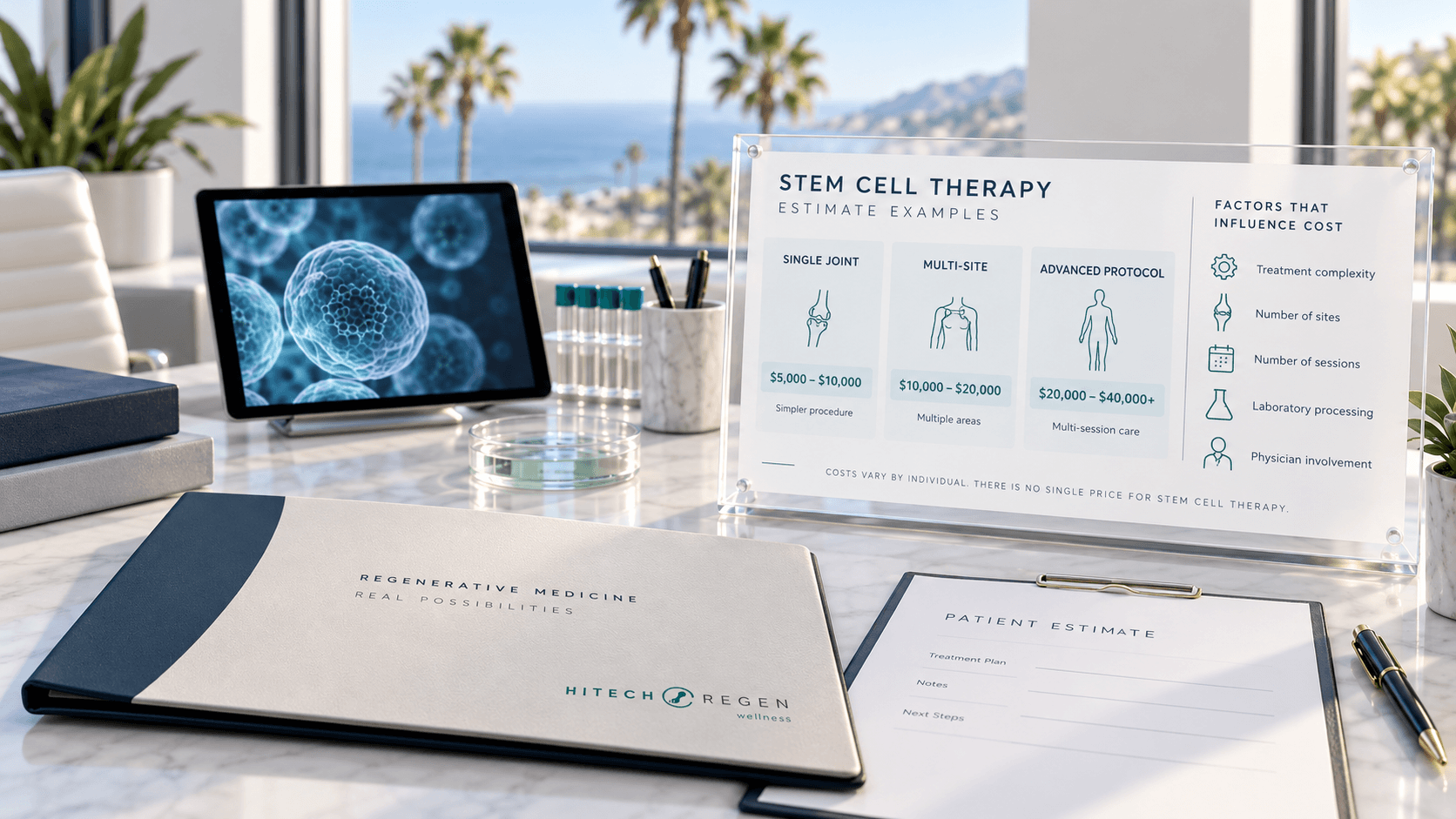
In the United States, published industry surveys such as BioInformant’s long-running cost analyses place most stem cell therapy programs between roughly $5,000 and $50,000, with single-site orthopedic procedures most commonly reported in the $3,000 to $8,000 range and complex multi-session protocols running far higher. Insurance almost never covers it, because outside of established transplant medicine these therapies are investigational and not FDA approved.
Those two sentences answer the headline question. The more useful questions are why the range is so wide, which cost drivers are legitimate, what the quoted price does and does not include, and how to recognize a quote that signals corner-cutting or hype. This guide walks through all of it, so you can evaluate any provider, including us, with clear eyes before you book a conversation.
Typical price ranges in 2026
Figures below summarize ranges reported publicly by industry trackers and provider surveys, including BioInformant and multi-clinic pricing guides. They are market context, not Hitech Regen pricing. Personalized quotes only come after a physician consultation.
| Protocol type | Commonly reported US range | Notes |
|---|---|---|
| Single-joint orthopedic procedure | $3,000 to $8,000 | The most quoted figure online; excludes imaging and follow-ups at some clinics |
| Multi-site or repeat orthopedic protocol | $8,000 to $20,000 | Price scales with sites treated and sessions |
| Systemic wellness protocol | $10,000 to $30,000 | Cell source, cell count and lab standards drive the spread |
| Complex condition-focused programs | $20,000 to $50,000+ | Often multi-week; some patients travel abroad, which adds risk considerations |
Get a real number for your situation
Those are market ranges. Yours depends on cell source, protocol design and what screening finds. Two minutes tells you whether you are a candidate, and a physician consultation turns that into a written, all-inclusive quote.
Physician-guided. Written quotes, no pressure. Serving Southern California at home.
What actually drives the price
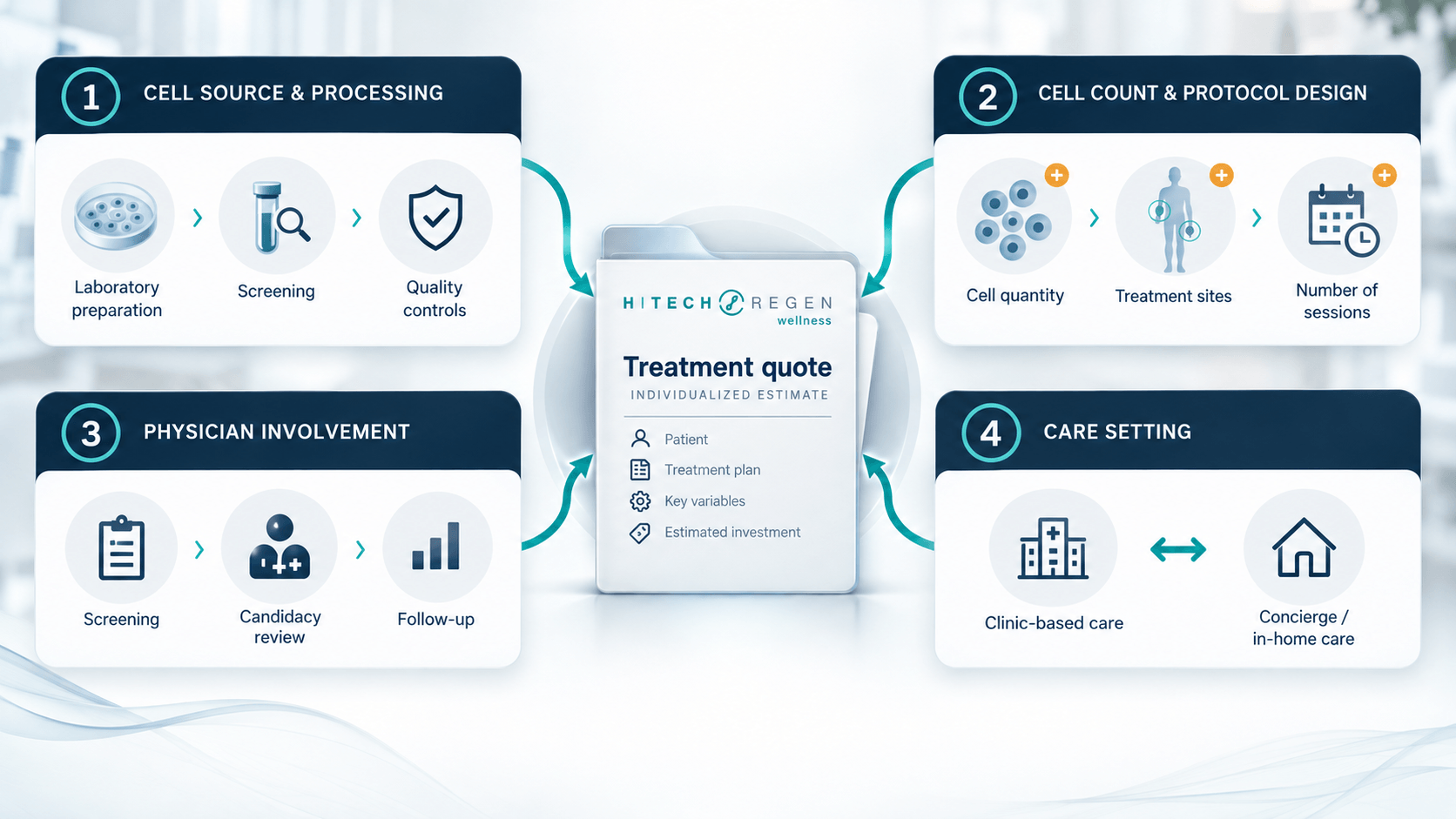
Cell source and processing
Cells cultured and screened in accredited laboratories cost more to produce than minimally processed same-day preparations, and donor-derived products carry laboratory screening costs that a reputable provider can document. When two quotes differ by thousands of dollars, the laboratory behind the product is usually the biggest reason.
Cell count and protocol design
Quoted prices scale with the number of cells delivered, the number of treatment sites and the number of sessions. A low headline price sometimes describes a single low-dose session that the clinic expects to repeat.
Physician involvement and screening
A physician-guided program includes candidacy screening, health-history review and follow-up. Clinics that skip screening can charge less, which is a warning sign rather than a bargain. Our own screening starts before any pricing conversation, through the Am I a Candidate assessment.
Setting and service model
Concierge and in-home care models price in clinician travel and one-on-one time. Facility-based clinics price in overhead. Neither is automatically more expensive; what matters is that the quote is transparent about what is included.
Does insurance cover stem cell therapy?
For wellness, orthopedic and regenerative uses, the answer is no as a rule. Health insurers, including Medicare, cover stem cell procedures only for established indications such as hematopoietic stem cell transplantation for certain blood cancers and disorders. Because regenerative applications are investigational and not FDA approved, they are billed out of pocket. Some patients use HSA or FSA funds where their plan administrator allows it, and many providers offer financing; confirm both in writing before committing.
Red flags that change the value of any price
The Food and Drug Administration has publicly warned about clinics marketing unapproved stem cell products with inflated claims. Whatever the price, walk away from providers who promise cures or guaranteed results, cannot name the laboratory and screening standards behind their product, quote a price before any medical screening, or push same-day decisions with expiring discounts.
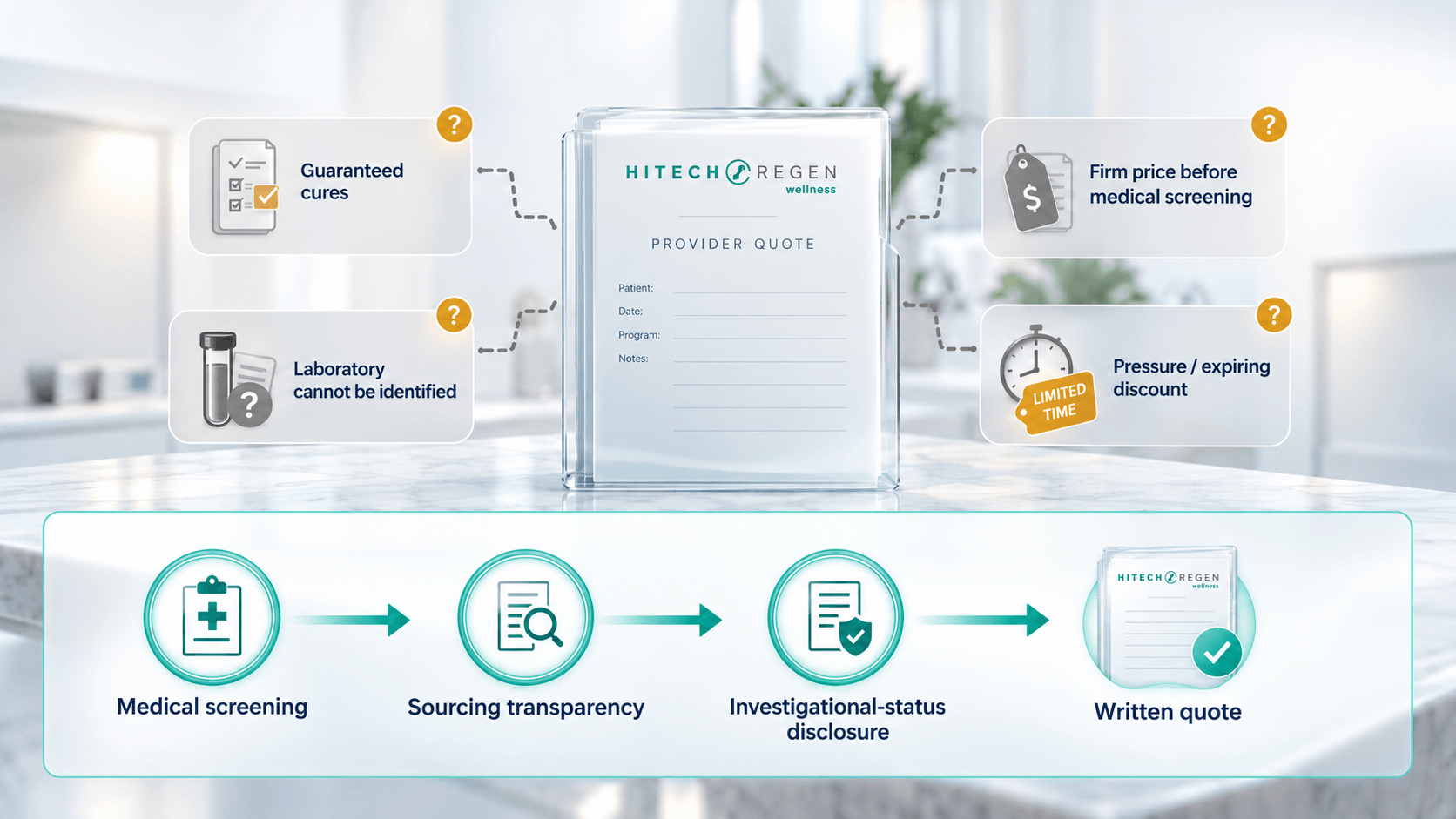
An honest provider tells you these therapies are investigational, tells you who is not a candidate, and puts the full scope of the quote in writing.
Cheaper abroad: what the math misses
Medical-tourism packages in Mexico and elsewhere often undercut US prices substantially, and cost-focused searches surface them heavily. The published price rarely includes travel, companion costs, time away, or, most importantly, follow-up care and recourse if something goes wrong. Regulatory oversight of cell sourcing also varies widely by country. None of that makes every foreign clinic bad; it makes the comparison more complicated than the sticker price.
How Hitech Regen approaches pricing
Hitech Regen is a physician-guided regenerative wellness practice serving Southern California with in-home care. We do not publish menu prices because a responsible quote depends on screening: your goals, your health profile and the protocol a physician actually recommends, whether that is a cell-based therapy, exosome therapy, or nothing at all. What we commit to: screening before selling, sourcing you can ask about, and a written, all-inclusive quote with no surprise line items. Every condition page, from COPD to Parkinson’s disease and type 2 diabetes, gives the same answer under “When is cost discussed?”: after screening, never before.
Frequently asked questions
How much does a single-joint stem cell procedure cost?
Industry surveys most commonly report $3,000 to $8,000 for a single-site orthopedic procedure in the US, depending on cell source, cell count and the clinic’s screening and follow-up model. Verify what the quote includes before comparing numbers.
Does insurance cover stem cell therapy?
Not for regenerative or wellness uses. Insurers cover stem cell procedures only for established indications such as bone marrow transplantation for certain blood disorders. Regenerative protocols are investigational, not FDA approved, and paid out of pocket.
Why do stem cell therapy prices vary so much?
The biggest drivers are the laboratory behind the product, cell count, the number of sites and sessions, physician involvement, and the care model. Two quotes thousands of dollars apart are often describing genuinely different products and protocols.
Is cheaper stem cell therapy in Mexico worth it?
Sometimes the headline price is real, but it usually excludes travel, follow-up care and recourse if complications arise, and cell-sourcing oversight varies by country. Compare the full picture, not the sticker price.
Can I use HSA or FSA funds for stem cell therapy?
Some patients do, but eligibility depends on your plan administrator’s rules for investigational therapies. Ask your administrator in writing, and ask the provider for documentation they can submit.
How do I get an actual price for my case?
Through screening. A responsible provider reviews your goals, health history and candidacy first, then quotes a specific protocol in writing. Be cautious with any clinic that names a firm price before asking a single medical question.
Still weighing what it should cost?
The honest answer depends on your screening, not on a price list. Start with the two-minute candidacy check, then get a written quote with no surprise line items and no pressure to book.
Physician-guided. Screened candidates only. Delivered at home across Southern California.