
Exosomes vs Stem Cells vs PRP: Key Differences Explained
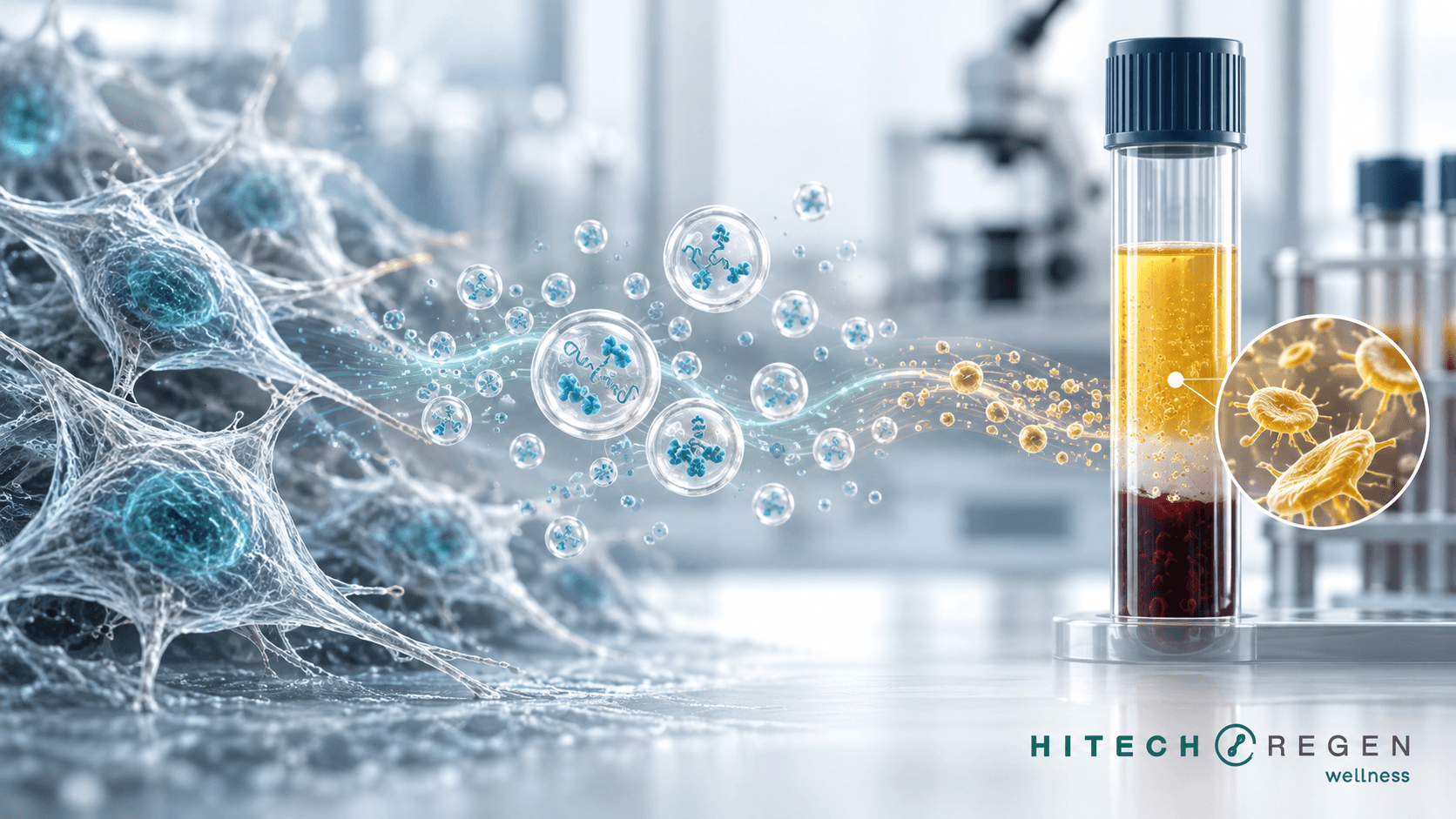
Exosomes, stem cells and PRP are three related but genuinely different tools in regenerative medicine. Stem cells are living cells that can divide and develop into other cell types. Exosomes are not cells at all. They are tiny vesicles released by cells, loaded with proteins, lipids and genetic signals that influence how nearby cells behave. PRP is a concentrate of your own platelets and the growth factors they carry. In short: stem cell therapy delivers living cells, exosome therapy delivers the signals those cells use to communicate, and PRP delivers a broader, less refined version of those signals taken from your own blood.
All three are being studied for recovery, longevity and wellness support. This guide walks through how each works, where they differ, what the research actually says, and the questions worth asking before choosing any of them, starting with the biology and ending with a practical comparison you can bring to a consultation.
What are stem cells?
Stem cells are unspecialized cells with two defining abilities: they can renew themselves through division, and they can differentiate into more specialized cell types. The National Institutes of Health describes them as the body’s internal repair system, replenishing tissues throughout life.
Regenerative wellness programs most often work with mesenchymal stromal cells (MSCs), which researchers have studied for their ability to modulate inflammation and support tissue repair. A related area of research involves MUSE cells, a stress-tolerant cell population first described by researchers at Tohoku University in Japan. You can read more on our MUSE cell therapy page.
One point of honesty matters here: outside of established uses such as bone marrow transplantation for blood disorders, stem cell therapies are considered investigational in the United States and are not FDA approved for wellness or orthopedic indications. Reputable providers say so plainly.
What are exosomes?
Exosomes are extracellular vesicles, typically 30 to 150 nanometers across, that nearly all cells release. Think of them as sealed envelopes of biological instructions: growth factors, messenger RNA, microRNA and signaling proteins. When a cell absorbs an exosome, those instructions can change its behavior, dialing inflammation up or down, or nudging repair processes.
The exosomes used in regenerative programs are usually derived from laboratory-cultured mesenchymal stromal cells. Because they carry the signals without the cell itself, researchers describe exosome therapy as a cell-free approach to the same biology. Our exosome therapy page covers sourcing and screening in more detail.
What is PRP?
Platelet-rich plasma is the oldest and simplest of the three. A small sample of your own blood is drawn, spun in a centrifuge to concentrate the platelets, and the concentrate is returned to the treatment area during the same visit. Platelets carry growth factors, so PRP works on the same signaling principle as exosomes. The difference is that the signals come from your own blood rather than from cultured cells, and they are far less concentrated and far less standardized.
Two things follow from that. Because the material is autologous, meaning it came from you, donor screening and immune-matching questions do not arise. And because PRP has been in orthopedic and aesthetic use for much longer, it has by far the largest body of human trial evidence of the three. That is a mixed blessing: the trials are numerous, and their results conflict.
The conflict has a known cause. Preparation protocols vary widely between clinics, including spin speed, final platelet concentration and whether white blood cells are kept in. Two clinics can both call the result PRP and produce genuinely different material. A 2021 randomized clinical trial published in JAMA, known as the RESTORE trial, found no significant benefit over placebo for knee osteoarthritis pain or cartilage volume, while other trials have reported improvement. That is the single most useful question to ask a provider: what exactly is your preparation protocol?
Regulatory status differs as well. Because PRP is made from your own blood and minimally processed, it sits under a different FDA framework than cultured cell or exosome products, and the centrifuge systems used to prepare it are cleared devices. That is not the same as PRP being FDA approved for orthopedic or aesthetic uses. It is not, and insurers generally do not cover it.
The key differences, side by side
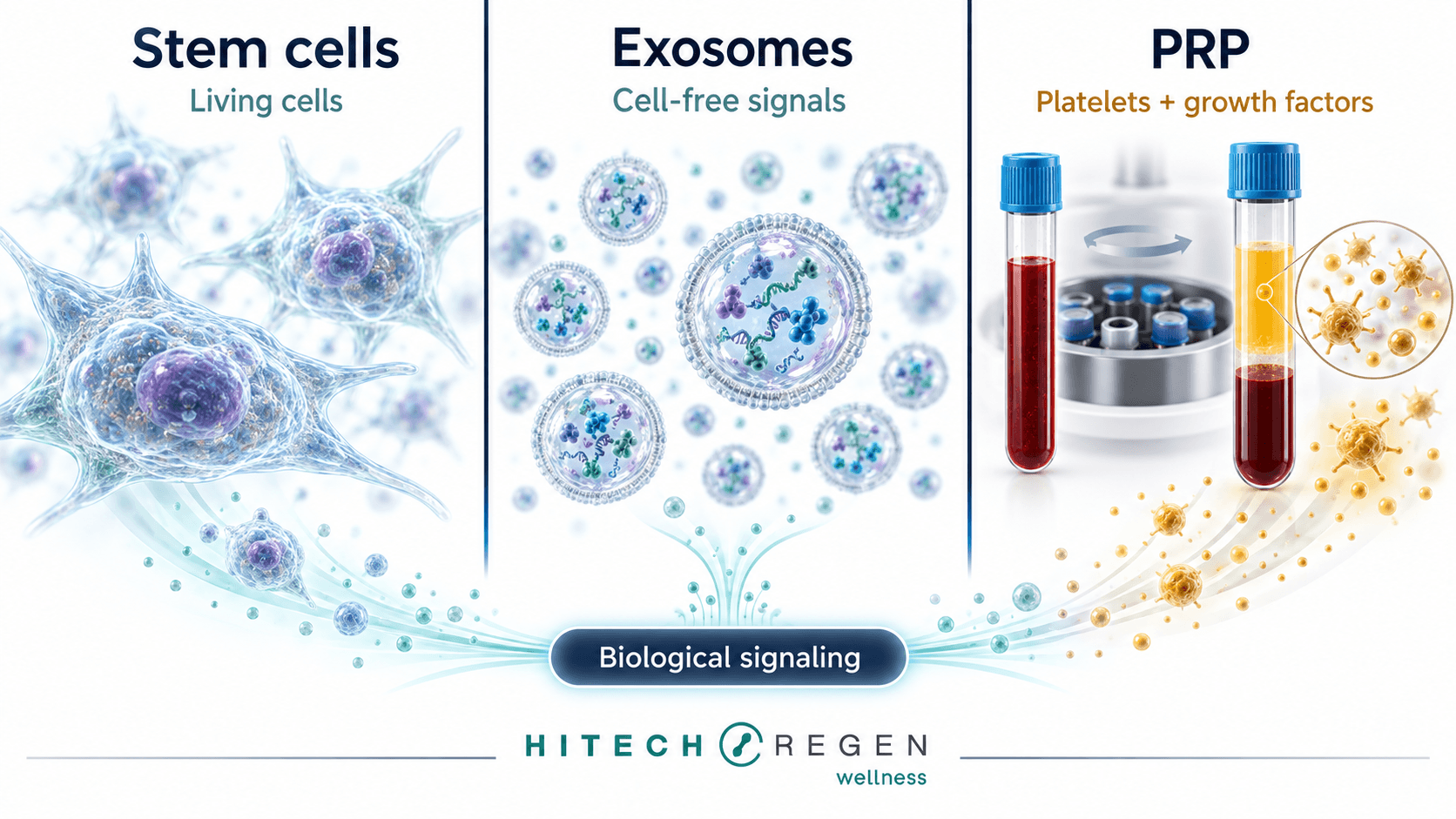
| Factor | Stem cells | Exosomes | PRP |
|---|---|---|---|
| What it is | Living cells that can divide and differentiate | Cell-free vesicles carrying biological signals | A concentrate of your own platelets and their growth factors |
| Where it comes from | Screened donor tissue or your own tissue | Laboratory-cultured cells | Your own blood, drawn at the visit |
| How it works | Cells engraft or act locally, releasing signals over time, including their own exosomes | Delivers the signaling payload directly, without living cells | Delivers a broad, unstandardized mix of growth factors |
| Stability and handling | Sensitive: viability depends on processing and timing | More stable to store and standardize between batches | Prepared and used the same day; nothing to store |
| Immune considerations | Living donor cells carry a theoretical immune response risk | No living cells; researchers consider immunogenicity lower | Autologous, so donor-matching questions do not arise |
| Session profile | Typically a more involved protocol | Typically shorter sessions, often repeated as a series | A short visit including the blood draw, usually as a short series |
| Research maturity | Decades of study; approved uses limited to specific transplant medicine | Younger field; early-phase human studies, mostly preclinical evidence | The largest human trial evidence of the three, with conflicting results |
| Consistency between providers | Varies with the laboratory behind the product | Varies with the laboratory behind the product | Varies with the preparation protocol each clinic uses |
| Relative cost position | Typically the highest of the three | Typically mid-range | Typically the lowest |
| FDA status for these uses | Investigational, not FDA approved | Investigational, not FDA approved | Not FDA approved for these uses; prepared with cleared devices |
Cost positions describe the general market, not Hitech Regen pricing. A personalized quote follows a physician consultation.
Not sure which of the three fits you?
The table shows how they differ on paper. Which one suits you depends on your goals, your health history and what screening finds. Two minutes of candidacy questions is where that decision actually starts.
Physician-guided. Screened candidates only. Serving Southern California at home.
How the three relate
The comparison is not really either-or, because all three sit on the same ladder. PRP is growth-factor signaling straight from your own blood. Exosomes are that same class of signaling, packaged by cultured cells, then isolated and concentrated in a laboratory. Stem cells are the cells that produce those packages in the first place. Moving up the ladder buys concentration and consistency; moving down buys simplicity and a longer track record.
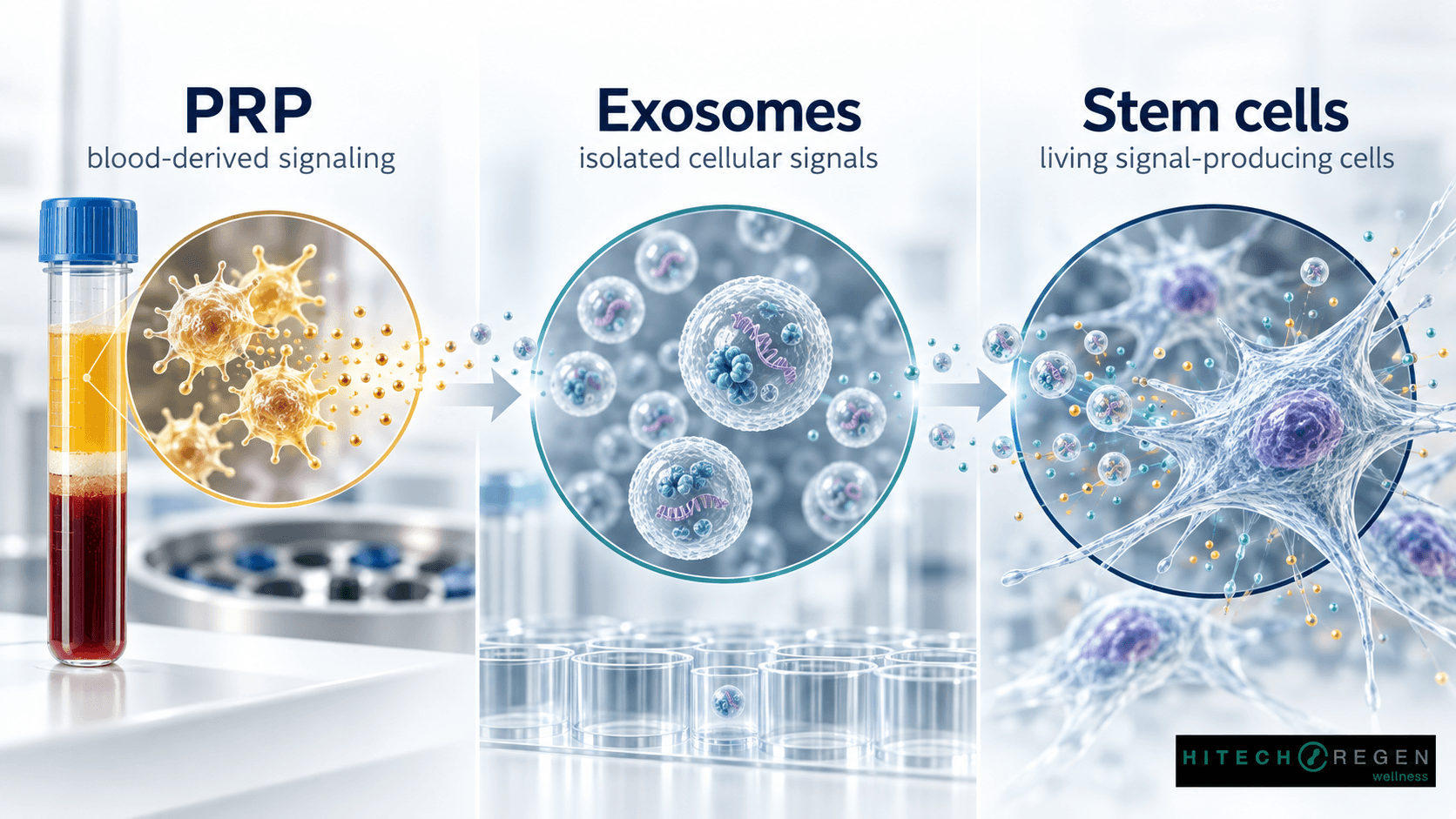
A growing body of research, including reviews indexed by the National Library of Medicine, suggests that much of the benefit observed in mesenchymal stem cell studies comes from paracrine signaling, the cocktail of factors the cells secrete, rather than from the cells permanently replacing damaged tissue. Exosomes are a concentrated form of exactly that secreted signal. That is why some physicians frame exosomes as “the message without the messenger”, and why the therapies are sometimes discussed together in a single care plan, alongside supportive options such as NAD+ therapy for cellular energy metabolism.
Which questions decide the choice?
What is the goal?
Aesthetic and recovery goals such as skin quality, hair support and post-procedure recovery are where exosome and PRP protocols are most commonly used today. Broader wellness and vitality goals may point toward cell-based protocols or a combination. Condition-specific considerations, from longevity and vitality to neurological support, change the calculus again; the Parkinson’s disease, peripheral neuropathy and rheumatoid arthritis pages each explain where the research stands for that condition.
What does screening show?
None of the three is right for everyone. Active cancer, certain infections, pregnancy and some medication profiles are common exclusion criteria in research settings, and a responsible provider screens for them before anything else. Blood conditions and anticoagulant use matter specifically for PRP, since the material starts as your own blood. That screening conversation is exactly what our Am I a Candidate assessment starts.
What does the evidence support?
Human evidence is strongest for PRP in volume and weakest in agreement, and it is still maturing for both cell-based and exosome protocols. The FDA has warned consumers about clinics that market unapproved stem cell and exosome products with cure claims. A trustworthy provider will describe these therapies as supportive and investigational, document sourcing and preparation, and decline to promise outcomes.
How Hitech Regen approaches it
Hitech Regen is a physician-guided regenerative wellness practice serving Southern California with in-home care. Every plan starts with a candidacy review and a physician conversation about goals, screening and realistic expectations, not with a menu. Where a cell-based protocol, an exosome protocol or neither is appropriate, that is what you will hear.
Frequently asked questions
What is the difference between PRP and stem cells?
PRP is a concentrate of your own platelets and the growth factors they carry, prepared from a blood sample at the visit. Stem cells are living cells that can divide and differentiate, sourced from tissue and processed in a laboratory. PRP delivers signals; stem cells deliver the cells that produce those signals.
Are exosomes better than PRP?
Not automatically. Exosomes are more concentrated and more consistent between batches, because they are isolated in a laboratory. PRP has far more human trial data, though those trials disagree, and it avoids donor sourcing questions entirely. Which matters more depends on your goal and your physician’s judgment.
Are exosomes better than stem cells?
Neither is better across the board. Stem cells are living cells with decades of research behind them; exosomes deliver cell signals in a more stable, cell-free form. The right choice depends on your goals, screening results and a physician’s judgment, and both remain investigational for wellness uses.
Where do exosomes come from?
Clinical-grade exosomes are typically isolated from laboratory-cultured mesenchymal stromal cells sourced from screened donor tissue. Reputable providers can document the laboratory, the screening standards and the processing method behind every batch they use.
Are exosomes, stem cells or PRP FDA approved?
None of them, for these uses. Outside of specific transplant medicine uses for certain blood disorders, stem cell and exosome products are not FDA approved. PRP is prepared with cleared devices but is not approved for orthopedic or aesthetic indications. All are paid out of pocket.
Can exosomes and stem cells be used together?
Some care plans discuss them together, since exosomes are essentially the signaling output of stem cells. Whether a combined plan makes sense is an individual medical decision that depends on goals, health history and physician screening.
What is the downside of exosome therapy?
The main limitations are a young evidence base, batch-to-batch variability between suppliers, and cost, since sessions are typically paid out of pocket. Choosing a provider who documents sourcing and avoids cure claims reduces the practical risks.
How do I know if I am a candidate?
Candidacy starts with screening: health history, medications, goals and exclusion criteria such as active cancer or infection. A physician review determines whether a cell-based protocol, an exosome protocol or neither is appropriate for you.
Still weighing exosomes, stem cells and PRP?
Take the two-minute candidacy assessment, or talk it through with our physician team at home, anywhere in Southern California. If none of the three is right for you, that is what you will hear.
Physician-guided. Screened candidates only. Delivered at home across Southern California.